Showing posts with label Population. Show all posts

Thursday, October 27, 2016

Making A Womback!

This is my final action project for my Population class. This unit was about the survivorship curve of organisms. For this action project I found ten different data points that I researched and gathered data on for an organism that I chose which was Wombats. Then I did some research on how we as humans affect them. I made a video to show all the work I did. My favorite part of this project was coming with the name for this action project. For example I chose between “Mortal Wombat”, “Making a Womback”, and “No Wombat No Cry”.Even though I had fun, the biggest problem I had while making this project was choosing between all the awesome names for my project. I ended up choosing “Making a Womback” because it made the most sense for my data.


Works Cited

"Northern Hairy-nosed Wombat." , Lasorhinus Krefftii (Department of Environment and Heritage Protection). Queensland Government, 23 Oct. 2015. Web. 27 Oct. 2016.

UN, Dept. of Economic and Social Affairs. "Population of the Entire World, Yearly, 1950 - 2100." GeoHive. GeoHive, 2013. Web. 27 Oct. 2016.

Friday, October 14, 2016

Deceased by Disease

This is my second action project for my population class. This unit was about the evolution of animals and learning how to find data. For this action project I chose ten different cats that I researched and gathered data on them. Then I chose three of those cats and hypothetically put them in a place hey don’t naturally live. I made a video to explain what would happen if I were to put them there. My favorite part of this project was seeing all the cats that I researched as well as their awesome names.The biggest problem I had while making this project was having to work with the video without looking at the script. I ended up putting the script in the slideshow and just use it as subtitles, and I’m happy that it turned out pretty well.

India is a very interesting place, and it’s beaches can be even more interesting. Their beaches contain a large amount of wildlife, and it has an extremely warm climate. The beaches are covered in soft sand, grass, and saltwater. Wildlife in this area includes many predators like sharks, tigers, and especially snakes. For a species to live here they need to be able to fend for themselves against other species, and they need to be able to know how get fresh water. They also need to know what food is good to eat, and how to make a good shelter. Larger animals would thrive in this environment, while smaller animals are more at risk of becoming prey. A large threat for organisms would be insects since they are likely to carry diseases. House cats do not naturally live in this area but I think it would be interesting to see how they would adapt to this possibly harsh environment.


I researched ten different house cats from Paws Chicago and recorded data on them.


Crux- 9.94 lb
Gelada- 7.13 lb
Starburst- 2.24 lb
Hawking- 6 lb
Chorizo- 3 lb
Tzatziki- 4 lb
Fig- 7.56 lb
Cupertino- 3 lb
Roseanne- 14 lb
Jessco- 10.63 lb


Of these ten cats I chose Starburst, Hawking, and Roseanne to be moved from their foster homes to an Indian beach. I chose them because they represent the minimum, median, and maximum weights of my data.


I found the average weight of the ten cats I chose as well as the maximum, minimum and range.


Numbers: 2.24,3,3,4,6,7.13,7.56,9.94,10.63,14
Mean: 6.75
Median:  6.57(rounded)
Mode: 3
Max:14
Min: 2.24
Range: 11.76


After finding the average weight of the cats, I created a “Box and Whiskers” plot to find the lower and upper quartiles.


Lower quartile: 3.25
Median: 6.57
Upper quartile: 9.34


Standard Deviation
data
data-mean
(data - mean)2
2.24
-4.51
20.3401
3
-3.75
14.0625
3
-3.75
14.0625
4
-2.75
7.5625
6
-0.75
0.5625
7.13
0.38
0.1444
7.56
0.81
0.6561
9.94
3.19
10.1761
10.63
3.88
15.0544
14
7.25
52.5625


σ=3.8756

Combination
C(n,r) =
C(10,3) =
10! / (3! (10 - 3)!) =120


Permutation
P(n,r) =
P(10,3) =
10! / (10 - 3)! =720

Works Cited

"Health Information for Travelers to India." Centers for Disease Control and Prevention. Centers for Disease Control and Prevention, 24 May 2016. Web. 14 Oct. 2016.

Only, By Appointment. "Pets Available | PAWS Chicago." PAWS Chicago. Paws, 2016. Web. 14 Oct. 2016.
Thursday, September 22, 2016

Sistrurus catenatus

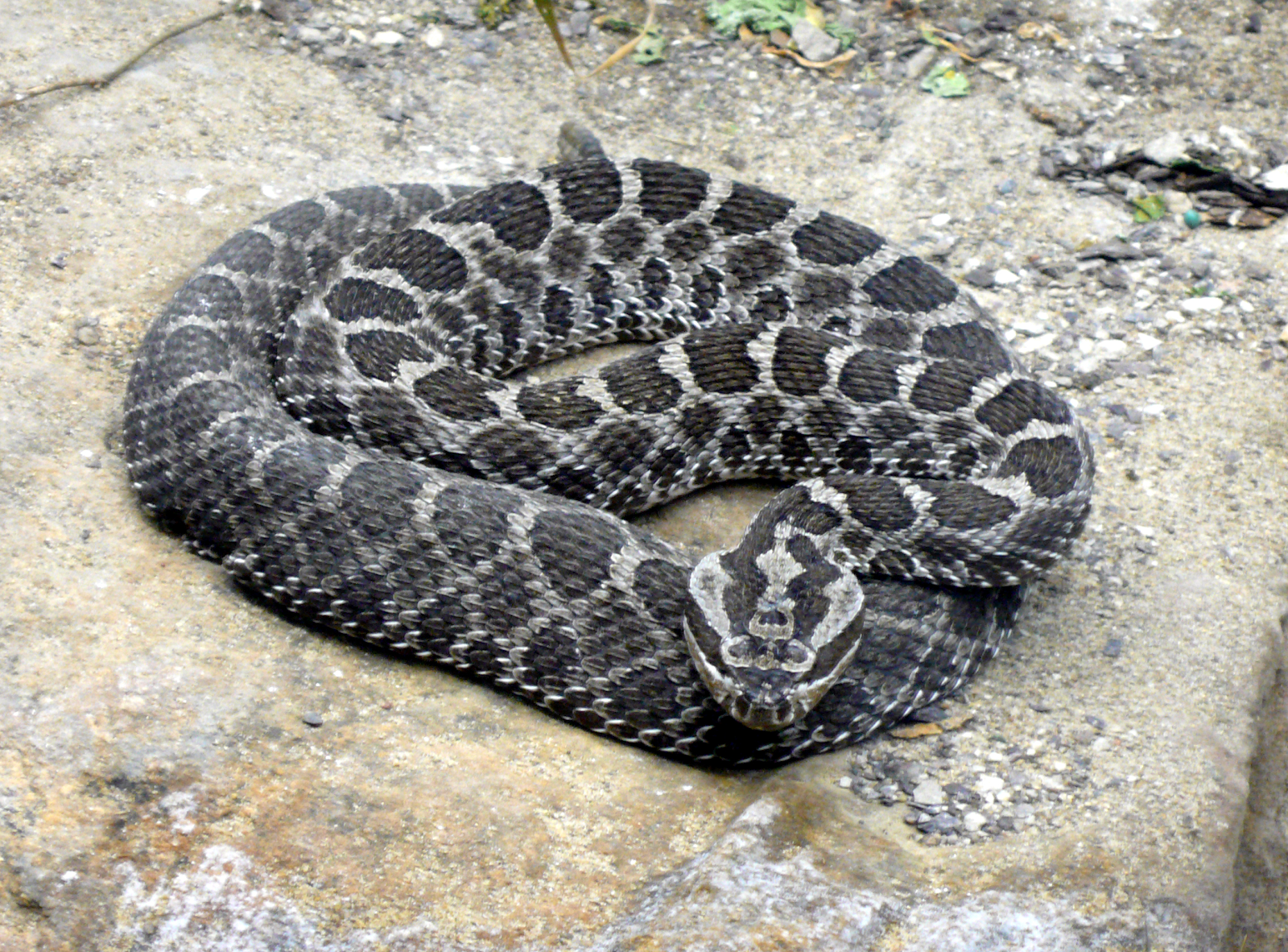
This is my first action project for my population class. This unit was about the taxonomy of animals and learning how to classify a species. For this action project I chose an animal at the Lincoln Park Zoo, I compared it to other animals, and taxonomized it. The animal I chose was the Massasauga Rattlesnake or Sistrurus catenatus. I also made a collage of the rattlesnake and turned it into a GIF, to help show the taxonomy of the rattlesnake. My favorite part of this project was seeing all the other colleges that other classmates made.The biggest problem I had while making this project was that I broke my toe around the time we started the project and I had a day less to work on it. I ended up working all night to make sure that it would be finished on time, and I think it turned out pretty well.


S. catenatus, St. Louis Zoo(2016)

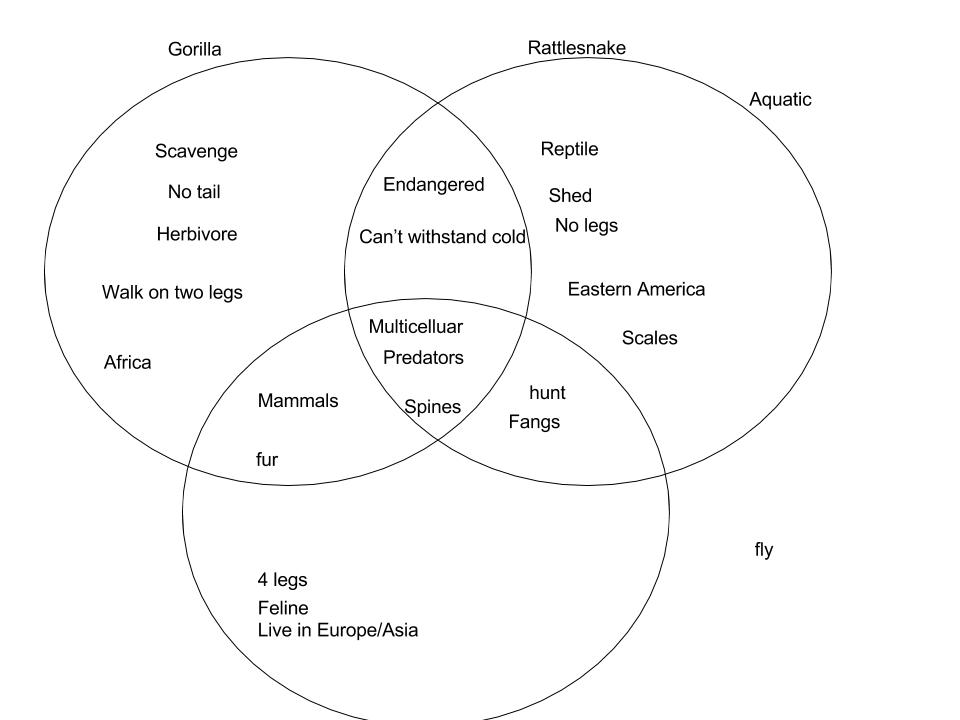
The animals that I compared to the Rattlesnake was MN's animal (the Eurasian Lynx) and AA's animal (the Gorilla). I noticed that it was easier to compare the Rattlesnake to the Lynx, than it was the Rattlesnake to the Gorilla. I put all the information into a Venn Diagram below.


Untitled drawing.jpg
                                         Comparison, MJF (2016)

Underneath I made some statements to compare and contrast using Set Theory language and then translated them into english so it’s easier to understand.

Let R=reptiles, S=Mammals, C=Cold Blooded, M= Massasauga Rattlesnake,L= Lynx, G= Gorilla

M ∈ {R}

Massasauga Rattlesnake is an element of Reptiles

R ∈ {C} ∴ M ∈ {C}

Reptiles are an element of Cold Blooded therefore Massasauga Rattlesnakes are an element of Cold Blooded

∀R:C
Being cold blooded is true for all reptiles
|{S}|=2
There are two elements in the set of Mammals
P(C) {{R}}
The subset of Cold Blooded is Reptiles

g ∈ Rc∩Cc∩S

Gorilla is an element of not reptiles or coldblooded but is an element of mammals

Works Cited

Michigan. "You Are HereDNR Wildlife & Habitat Wildlife Species Amphibians & Reptiles." DNR. State Of Michigan, n.d. Web. 26 Sept. 2016.

Arcsin. "Sistrurus Catenatus." Massasauga Classification. Bioweb, n.d. Web. 26 Sept. 2016.