Saturday, May 28, 2016

Fried Chicken


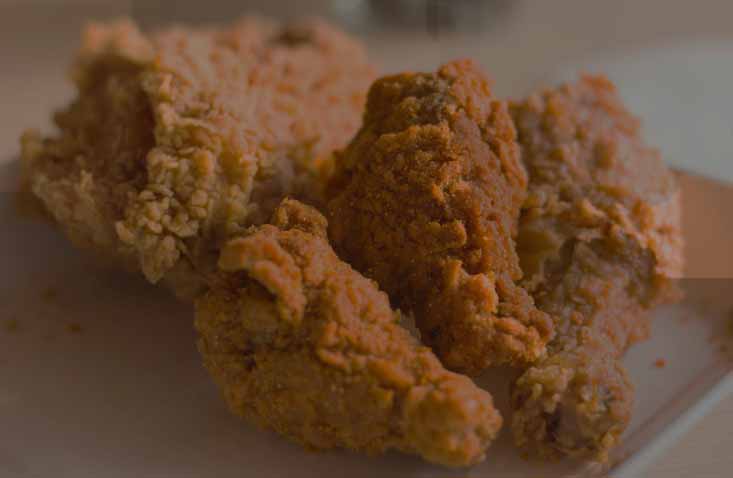
This is my third and final action project for my “Food for Thought” class. This unit was about  understanding how the Industrial Revolution & World War II changed our food system. It was also about understanding the impact these changes have had on both our food and environment. For this action project we created a taste tested the same food from two different places and compared them as if we were food critics. One of the places had to be your house while the other had to be a restaurant. My favorite part of this action project was being able to eat for a grade. The only problem I had while making this project was that I forgot to take my picture the first time I made it at home so I had to redo it.


thinkstockphotos-462797161.jpg
Chicken(2016)MJF)


images.jpg
Popeyes(2016)MJF

GMO's Are Great


This is my third and final action project for my “Food!” class. This unit was about GMO’s (Genetically Modify Organisms) in our food and how they help and mess up our food system. For this action project we chose a side saying whether GMO’s are good or bad and we made an argument to debate on which side is right. I made my Slideshow using google slides and screencastify instead of doing a video of me talking.. My favorite part of this action project was doing a actual debate in class, because it’s always fun being right and having a better argument. The only problem I had while making this project was choosing a side because at first using GMO’s seems morally wrong, but when you look at the facts GMO’s help so many people.


Thursday, May 12, 2016

Soil Depletion & Salinization

This is my second action project for my “Food for Thought” class. This unit was about seeing what a global food system looks like, and to understand the human and environmental impacts of this system. For this action project we created a speech and presented it to a camera. The speech was about a topic that is threatening our global food system and my topic specifically about soil depletion and salinization. My favorite part of this action project was the different ways my project that my project could have gone with all the other varieties of topics I could have chosen. The only problem I had while making this project was that I ended up changing my topic so I started working on the action project a little late.


Irrigation can be very helpful in the moment but it is a big problem because of the massive damage it can cause in the future. The global food system heavily depends on plants, and plants grow in soil. This means that soil needs to be taken care just as well as the plants. I am trying to persuade you to fix what we messed up in the past and fix to soil as well as our future. 

Salinization in the earth’s soil is becoming an increasing issue because less youths know how to farm and change the soil. Soil has been ruined by farmers for a while now due to irrigation which lead to soil depletion and salinization. There is a lot less people that know how to fix soil depletion or salinization today than maybe 30 years ago when farming was bigger. Now all we can do to keep the future for the human race alive is to teach teens and children how to fix these problems with the soil. 

This has been happening for too long. In fact this has been going on since Mesopotamia and before. They have faced large problems with salinity as well. Mesopotamia is what Iraq used to be in the past. Mesopotamians used to have sudden floods from the highlands of Anatolia, so they decided to create an irrigation system that would not only help their crops but also solve flooding. Their irrigation system started in the Euphrates and drained out into the Tigris river. They would use some of that water to drain into their farms. It worked really well but that was because they never had a drought.

We can learn from the Mesopotamians and stop irrigation. We don’t think that anything will go wrong until it does but maybe we should start thinking about the future. The Abbasid Caliphate started to expand itself into other places around Europe around 762 AD. One of the places they traveled to was Mesopotamia where they saw the many flaws of their irrigation system. The only way they could think of to fix it was to tear it down completely and renovate it. We can show that we learned from this by not using irrigation or at least have certain laws that protect the soil from salinization and soil depletion. I’m not saying that what the Mesopotamians had wasn’t a good idea though. 

To compromise losing irrigation we can use fresh water sources like certain rivers or lakes to give the plants something to drink. While the salinization in the soil deteriorates we should plant plants that don’t need too much water to survive that way if the salt takes the water from the plant the plant won’t mind as much. An example of some of those plants are may different types of common beans. 

It’s not that hard to make these small changes. All you need to solve these problems is a commitment to help save the future for our children and the earth itself. Salinization is like a poison to plants. Like my teacher says, It sucks, meaning that it is sucking the water and the life out of plants. We want to keep on living and the best way to do that is to help other living organisms. Plants are the only reason that we have lived for so long so why not return the favor and keep them alive. It’s the Humane thing to do. 


Works Cited 

Ancient Irrigation. (1999, May). Retrieved May 13, 2016 

USDA. “Soil Quality Resource Concerns: Salinization”.nrcs.usda. January 1998. May 13 2016. 

"Irrigation Salinity." Office of Environment and Heritage. State of New South Wales and Office of Environment and Heritage, 26 Sept. 2013. Web. 13 May 2016.

Making Dough

This is my second action project for my “Food!” class. This unit was about different chemical reactions that occur while cooking or baking, like leaving for example. For this action project we conducted a lab experiment to see what would happen if we were to change the leavening agents in two types of bread, while we kept one the same. I made my document using isuu which is a website that turned my pdf to look pretty good.. My favorite part of this action project was doing the baking, because I don’t ever bake which made me appreciate the project so much more. The only problem I had while making this project was that a classmate forgot to time the yeast bread which may have affected the experiment.

Monday, April 25, 2016

Feeling Salty?

This is my first action project for my “Food for Thought” class. This unit was about different plants and how they are grown including what it took to get to where we are now in farming. For this action project we created a slideshow about how an ingredient of our choice came to be. I made my slideshow about salt using Prezi while using a map in the background so the participant of my presentation could have a visual sense of where salt came and went.. My favorite part of this action project was using Prezi. I don't use it too often so I was pretty cool to see the different dynamics it had. The only problem I had while making this project was that I turned my project in late which lowered my score.

Wednesday, April 20, 2016

Garden of My Dreams

This is my first action project for my “Food!” class. This unit was about different plants and how they interact with each other through symbiosis. For this action project we created some ideas for a garden that we could potentially grow near our houses. I made a drawing of the garden that I could grow where the plants help each other using a diagram I made with Google drawings. My favorite part of this action project was seeing all the different ways you could raise the nitrogen, phosphorus, and potassium level of the soil we were given. The only problem I had while making this project was that I accidentally left my computer charger at my cousin's house, so I had to use one of the school computers. It wouldn’t have been a problem if the school computers were good but the mouse button kept getting stuck therefore making my illustration harder to make.

My garden will be on a flat area of my roof. I would be able to put the bins and tank in any formation or pattern I want because the space that I can use is fairly big. The only major problem that might come up is that there are a lot of pipes up there which lowers the amount of space I could have had.

I have three different sized bins that I could plant my garden in. One is a bin that is 2.7 by 1.7 by 1.7 ft3. I think this container will grow the most vegetables because it has the largest height and the roots of the plants will be able to grow deeper. The other bin I have is a lot shorter but it has a longer width. Its dimensions are 3.8 by 1.7 by .6 ft3. I think the plants in this bin will grow the least because it has the lowest height, and the plants won’t be able to grow their roots. The final container I chose is a glass tank with the dimensions of 2.1 by 1.1 by 1.1 ft3. I have no Idea how the plants will grow in this container but it would be interesting to find out.

My original soil quality had a ph level of 5.0. This is not good because it’s too acidic for some plants. The best way to raise the acidity level would be to add limestone to the soil. The soil also had a nitrogen level of 2 which is about 20 ppm (parts per million). This is a little to low for vegetables so to raise it I would have to add 5 pounds of blood meal per 100 acres and 7 pounds per 100 square ft if I had that much soil. My original potassium level was 2 which is about 400 ppm in the soil. This means I don’t need to add any potassium to my soil because the potassium level is just high enough. My phosphorus level was 3 which is also a perfect amount because it’s just high enough so I don’t have to add anything to it.

I chose the plants I chose because they’re all plants that I like. They also happen to help each other out. When anything of the other plants fall off the mycelium that I would plant to grow the mushrooms would decompose the fallen biomaterial and turn it into nutrients for the other plants to help them grow and it would be a never ending cycle of love.

My garden is actually pretty efficient because of the symbiotic relationships that help the plants grow. In this project I was able learn how to help plants grow each other the way Masanobu Fukuoka did in his book One Straw Revolution.

MJF Garden (2016)
Monday, March 21, 2016

Pollution

This is my final action project for my fuel class. This unit was about different ways how pollution is a problem and the ways we can help reverse the process we’ve created. For this action project I looked at the different ways I could stop my own pollution emissions, and how much pollution I give off in a year. I showed one of my actions that I would use to help reverse pollution using a diagram I made with google drawings. My favorite part of this project was seeing how other people in my class gave off pollution compared to the amount I gave off. The only problem I had while making this project was that my computer stop working so I had to finish it on my phone. I eventually got a new computer, and besides that this AP was pretty fun.


M.J.F

3-8-16

Fuel
Saving the World


Pollution is just contaminants that are put into the earth leading to the harm of the planet. Pollution is released into the atmosphere in many different ways. A common way pollution can occur is through gases that we emit through vehicles. A second way we give off pollution is through making products, because they release gases like CO2 which gets caught in the carbon cycle. Pollution is also created when we don’t compost food. Decomposers can’t break down food when they’re put in landfills because the chemicals in other waste kill the bacteria that should decompose the food.

I release 15.3 tons of carbon per year if I continue to live my life the same way I've been. My annual greenhouse gases are equivalent to about 0.711 garbage trucks of waste recycled instead of land-filled. My annual CO2 emissions could compare to 578 propane cylinders used for home barbecues. To offset the carbon emissions that I give off per yearI have to plant 356 trees. The site used the equation 23.2 lbs C/tree × (44 units CO2 ÷ 12 units C) × 1 metric ton ÷ 2,204.6 lbs = 0.039 metric ton CO2 per urban tree planted. This means that each tree that I plant will take in 23.2 pounds of carbon. Then they divided the molecular weight of carbon dioxide to carbon. After that the website multiplied that with the ratio of 1 metric ton per pound.

I have come up with 3 actions that I could do to help reduce the atmosphere’s carbon ppm (parts per million). My first action to change would be to insulate my house which can reduce the cost of my house’s cooling as low as 90%. That would be great for the atmosphere and my family's wallet. The second way to help reduce the carbon in the earth's atmosphere would be to drive a Tesla electric car, because it gives no CO2 emissions off. A car that uses gas releases 20 pounds of carbon per gallon, and on average 6 tons of carbon is released in a year by a single gas using car. This can also benefit my family specifically because we wouldn’t have to pay for gas which can cost a lot of money. My last idea to reduce the amount of carbon is to travel less, meaning not flying. This would lower my CO2 emissions by 53.3 pounds per air mile, as one air mile produces 53.3 pounds of carbon dioxide. I travel about 1632.14 miles per year so by taking a plane I give off 86993.062 pounds of carbon.


MJF (2016) ”Action 3 Diagram”


My actions will help reduce the global carbon ppm ​from 400 to 350 since that is about the amount that is healthy to the earth because they are all more efficient ways of what I do now. I won’t make much of a difference just by myself, but I could influence or inspire people to follow some of my actions which can cause a massive chain reaction of influencing others which would create an astronomical change in the earth's atmosphere’s carbon ppm.


Works Cited

1."GHG Equivalencies Calculator - Calculations and References." EPA. Environmental Protection Agency, 8 Oct. 2015. Web. 18 Mar. 2016.

2."Powerwall." Tesla. 2016. Web. 18 Mar. 2016.

3."First Understand, Then Destroy, Your Home Heating Bill." Mr. Money Mustache.Money Mustache, 2011. Web. 18 Mar. 2016.