This is my first and final action project for my fuel class. This unit was about different ways of making energy, and if they’re renewable or not. For this action project I looked at a nonrenewable resource we use for electricity, and showed how the US and a country of my choice consumes this resource. To show how they’re used I had to make a graph of my nonrenewable resource's usage in both countries. My favorite part of this project was looking at how drastically different the usage of crude oil in the US vs Greece is. I had so much trouble making the graph. For some reason the graph would use the wrong labels for each axis. I eventually fixed it, and besides that this AP was pretty fun.
Thursday, February 11, 2016

Friday, January 15, 2016
Hats 'N Coats
In my last unit of Rapid Prototyping, we learned about ma. For my final Action Project, the class and I were looking at any needs for our school’s new building. On our last field experience we went to the Rebuilding Exchange where we met Bryant Williams. While we were being toured we wrote some quotes that he said down. The quote that stood out to me was when he said”To make this work a we have to teach them about deconstruction”. If I’m honest It would have to agree with his statement, He was referring to those that are in the construction area of work, but realistically you probably know about deacons While I was trying to figure out what I wanted to do for my project I used Ikea Hackers.net. If you have ever heard of life hacks then you might notice this website has a lot of them. Ikea hackers basically has projects that you can work on that can make your life easier. While in thier website I saw a cool hat and coat rack and went off of that. I am very happy with the way it turned out. I am very pleased that it looks modern and unique, unlike my original idea. The piece was super easy to make and only took a total of one hour to make. I built my coat rack in the James Dyson Design and Engineer Lab. The only drawback of this project were that it wasn’t as sturdy as I hoped. There were wasn’t too many safety issues, while working on my project. The only safety hazard I had was making sure i didn’t slip with the screwdriver and impale myself.I just had to make sure I was focused on what I was doing as I was doing. If I were to give some pointers to another person they would be:
- Make sure you document all of your project
- Get your materials as early as possible
- Try to use power tools to make your life easier
- Add cool designs to the project
- Put a piece of yourself in your project
This action project was easier in the beginning but as the deadline started approaching I got a little rushed. Luckily I got back on track and I’m happy to say my project is complete. My favorite part the project was the design part, since there was so many possibilities. While making the time lapse I looked up how the time lapse works. So basically the camera calculated one frame per second for the entire time I was working.. I made a twenty second time-lapse to show how I constructed my project. I used a lot of torque since I was the screwdriver a lot. But I did use leverage to get the screws in place using a hammer.
See my instructable for instructions on how to make my coat and hat rack.
Thursday, January 14, 2016
Headphone Life
This is my third and final action project for my Biomimicry class. This unit was about different kinds of consumers, but more specifically decomposers. For this action project I looked at a product I use every day and looked up it's "life cycle". I also looked at the materials it's made of, and the life cycle of them to. After that I figured out ways to make the product more eco-friendly so it decomposes better. My favorite part of this project was making the timeline of my product. I actually wasted about ten minutes on it, because I drew the dinosaur too big and I put way too much detail in it. I still had fun doing it.
Thursday, December 17, 2015
3D Bishop
For my second STEAM action project in Rapid Prototyping I was told to create a Bishop from chess out of clay, plastic, and cardboard. Overall the project was easier than I expected and I had a lot of fun doing it. My favorite part was making the digital model of it even though it was also the hardest part. It was my favorite part because I was able to get such precise measurements and see it come to life. I didn't like making it out of cardboard because it didn't look how I wanted to and it was tedious to cut out the pieces for the model. If I had the opportunity to do this project again I would try to change my Bishop's hat because I thought it was too small at the base and too pointy at the top. This was definitely my favorite project to do.
Wednesday, December 16, 2015
Amphibmarine
This is my second STEAM action project for Biomimicry. I was told to create a hous that is based on an animal of my choice, so I chose the Mudpuppy and the Mexican Lance Headed Rattlesnake. When I took pictures of my poster I had trouble getting a specific view on the pieces I wanted to show in a picture. I also had trouble scanning all my pictures in a scanner because I couldn't make the colors dark enough and it would mess up. Overall I liked this project. I got to see my animals in real life at the zoo which was my favorite part of this unit.
 MJF(2015)Poster
Mudpuppy
MJF(2015)Poster Mudpuppy
- The Mudpuppy is an amphibian
- It has external gills which is rare
- It is protective of it's eggs which is rare
- It spends most of it's time on land
Mexican Lance-Headed Rattlesnake
- It's brown with even darker brown spots
- It's fangs are longer than an average rattle snake
- It has diamond shaped sscales
Habitat and Adaptions
The Mudpuppy (or Necturus maculosuslives), A.K.A. Waterdog, in the central timezone, North and South in fresh water sources. Of course the there are different biomes for each half of America. So the upper side of the mississippi river for example is in the the side of the U.S., therefore it freezes in that area a lot. Unlike it’s counterpart the lower side of the mississippi river is a lot warmer and doesn’t freeze due to its high temperatures. In the cold example I added insulation to my mobile home, which is how the Mudpuppy uses it’s fat. In the South they don’t have to worry about the cold as much and they are able to swim freely and bask in the sun. There is also different terrains in both halves of the U.S. In the Northern side there is a lot more underwater cliffs, while the South is more flat . Thats where my all terrain aspect comes in and it can move on different surfaces. There are other sources of water that the Mudpuppy uses, this is just only one of many of the habitats it lives in.
 MJF(2015)Poster
 MJF(2015)Poster
 MJF(2015)Poster
 MJF(2015)Poster
 MJF(2015)Poster
Sources Cited
"Mexican Lance-headed Rattlesnake - Detroit Zoo." Detroit Zoo. Web. 16 Dec. 2015.
"Mudpuppies, Mudpuppy Pictures, Mudpuppy Facts - National Geographic." National Geographic. Web. 16 Dec. 2015.
"Critter Catalog." BioKIDS. Web. 16 Dec. 2015.
Sunday, November 22, 2015
W and U
In this STEAM elective course, we learn about making products with present day machines.. We look at technology being used today to create products quickly, as well as the math and science concepts that allow these machines to work. In this Unit I learned about a lot, like geometry, number lines, angles, etc.To create projects we used three CNC machines - A Cameo cutting machine, a Carvey router, and a 3D printer. We make projects using technology from before our time as well as to using these new technological machines. My project is to make two letters in the english alphabet using specified materials. My letters are “w” and “u”. I had to make two versions of each letter - one being handmade, and the other made by machine. To learn more about my roject look at my slideshow below.
Friday, November 20, 2015
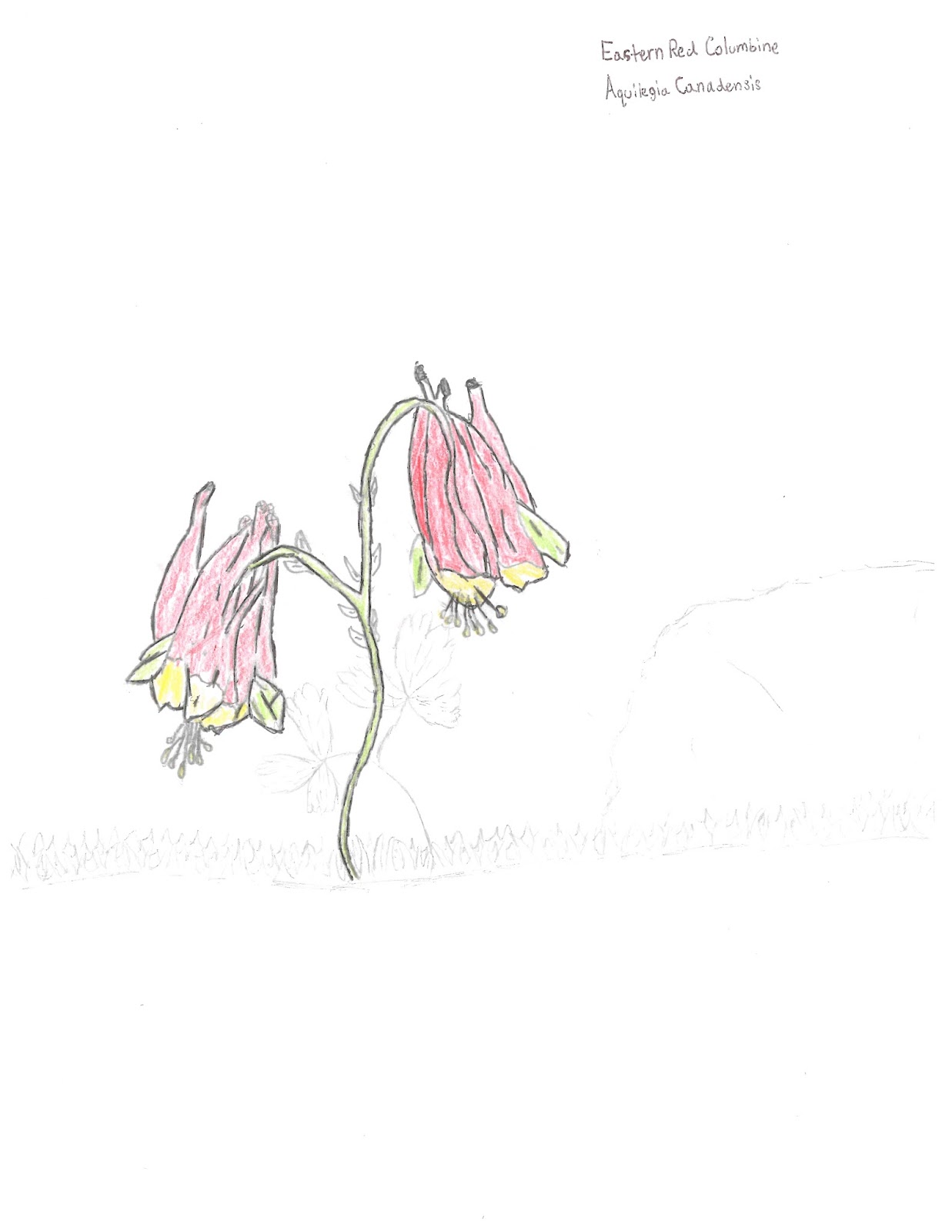
Aquilegia Canadensis
In this class we learn how we use plants to help solve human problems. For my first action project I was told to choose a problem in the world that relates to me and find a plant that solves that problem. My problem was that I sometimes get too hot or too cold at night. To fix this problem I designed a sleeping bag after the Aquilegia Canadensis (Eastern Red Columbine). I think I designed my sleeping bag pretty well to solve my problem as well as making a connection with my plant. When we first started our projects I could find a plant that has the same problem that I have. Luckily, through a lot of research I was able able to find the perfect plant. When I found my plant I was pretty excited because there was actually a lot of background information about my plant that had to do with native americans. Please enjoy my slideshow below.
Subscribe to:
Posts (Atom)